Understanding Mutual Funds
1. What is a mutual fund?
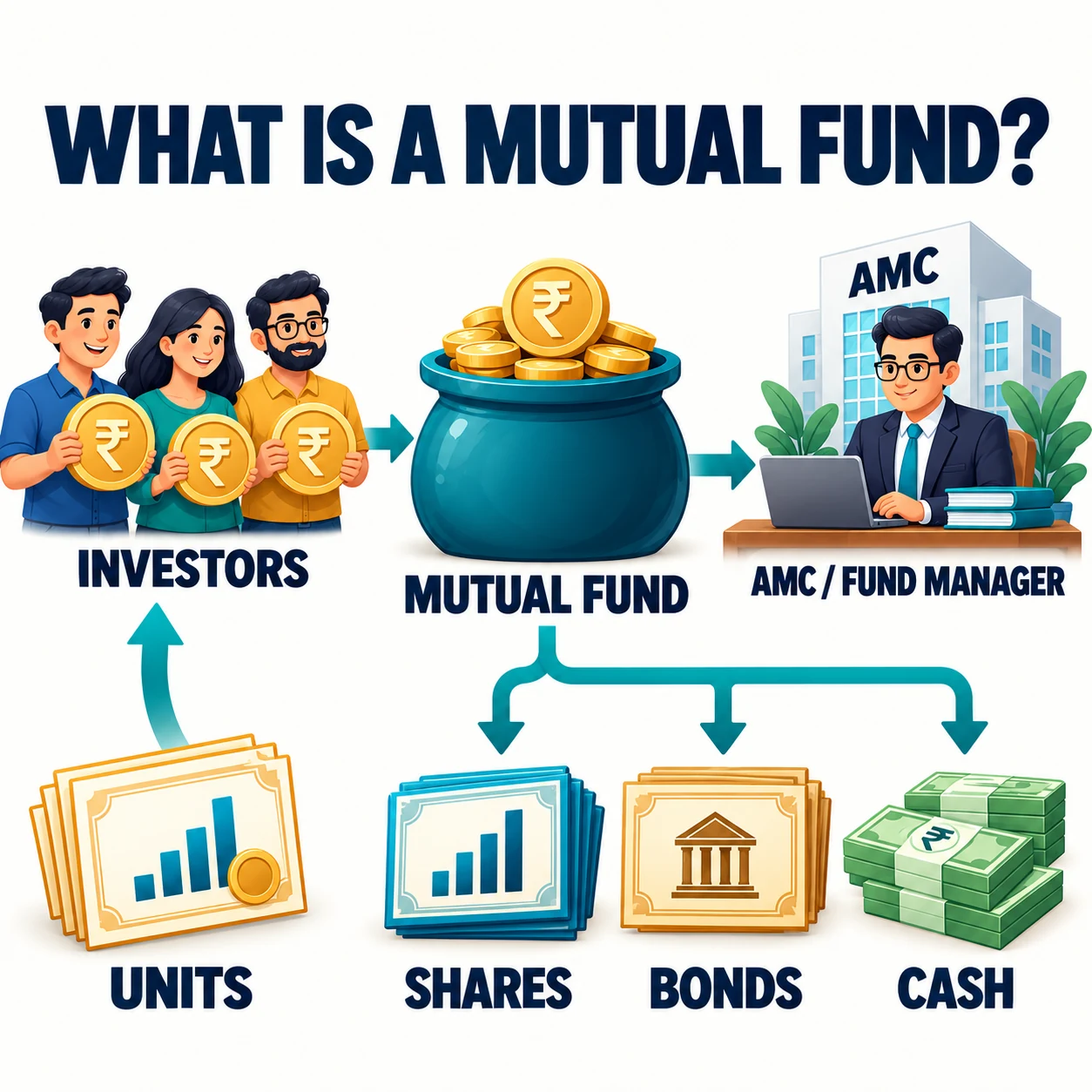
A mutual fund collects money from many investors and invests it according to the scheme’s stated objective. Investors receive units representing their share in the scheme.
The units are a proportional interest in the scheme, rather than a fixed bank balance.
Diversification spreads exposure across investments, but it cannot prevent every loss. A mutual fund is not a bank deposit and neither the AMC nor the fund manager guarantees the capital.
Key point: Units represent a share in the scheme; returns are not guaranteed.
2. How does a mutual fund work?
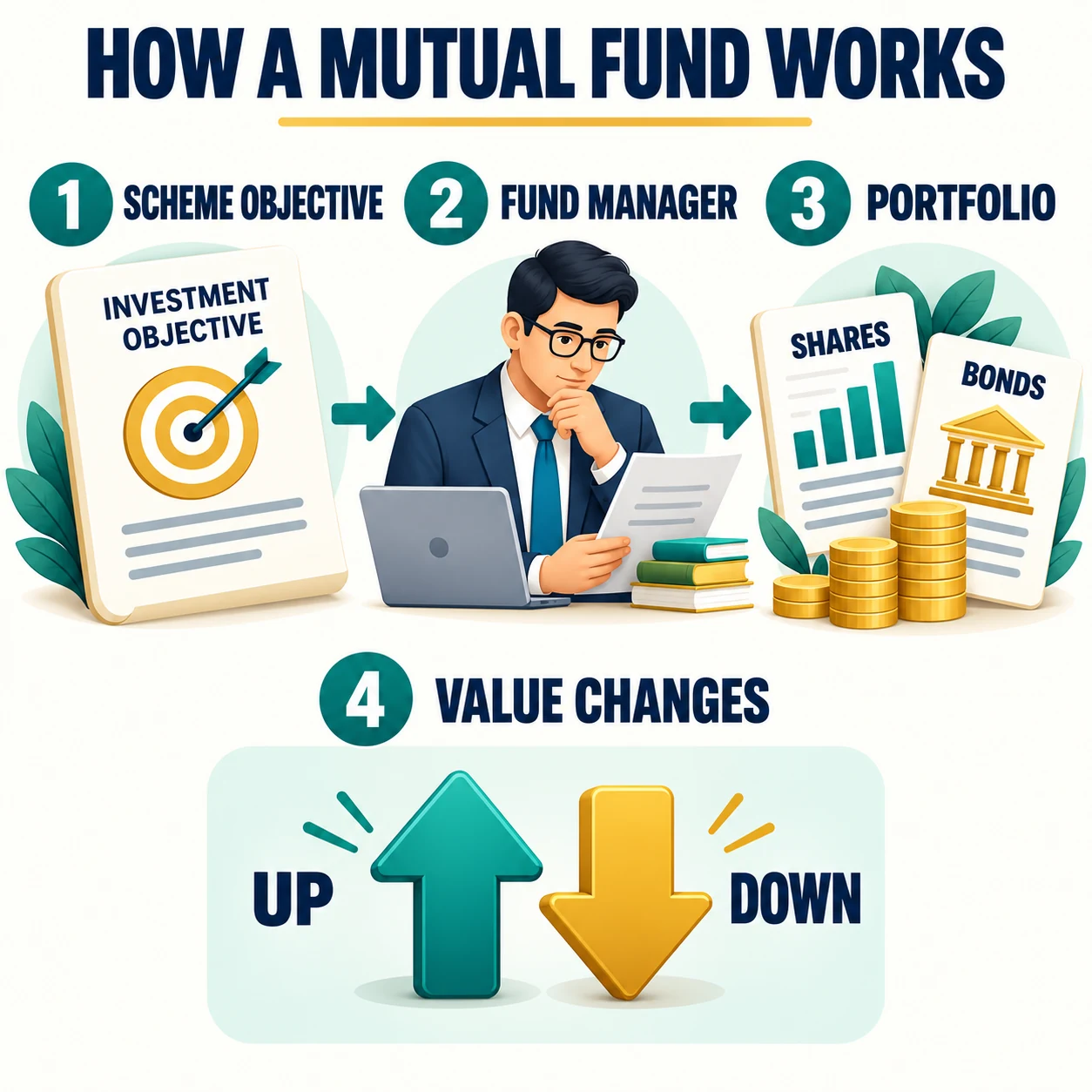
The pooled money is invested in assets such as shares or bonds, as described in the scheme documents. The portfolio value changes as the value of its investments changes.
The fund manager makes investment decisions within the scheme mandate; the AMC runs the investment management business. The scheme portfolio is the collection of investments held for unit holders.
Its gains, losses and expenses affect the value of the units. Read the Scheme Information Document (SID), Key Information Memorandum (KIM) and latest factsheet to understand that mandate.
Key point: The AMC manages the scheme; its fund manager invests within the mandate.
4. SIP and lump sum: what is the difference?
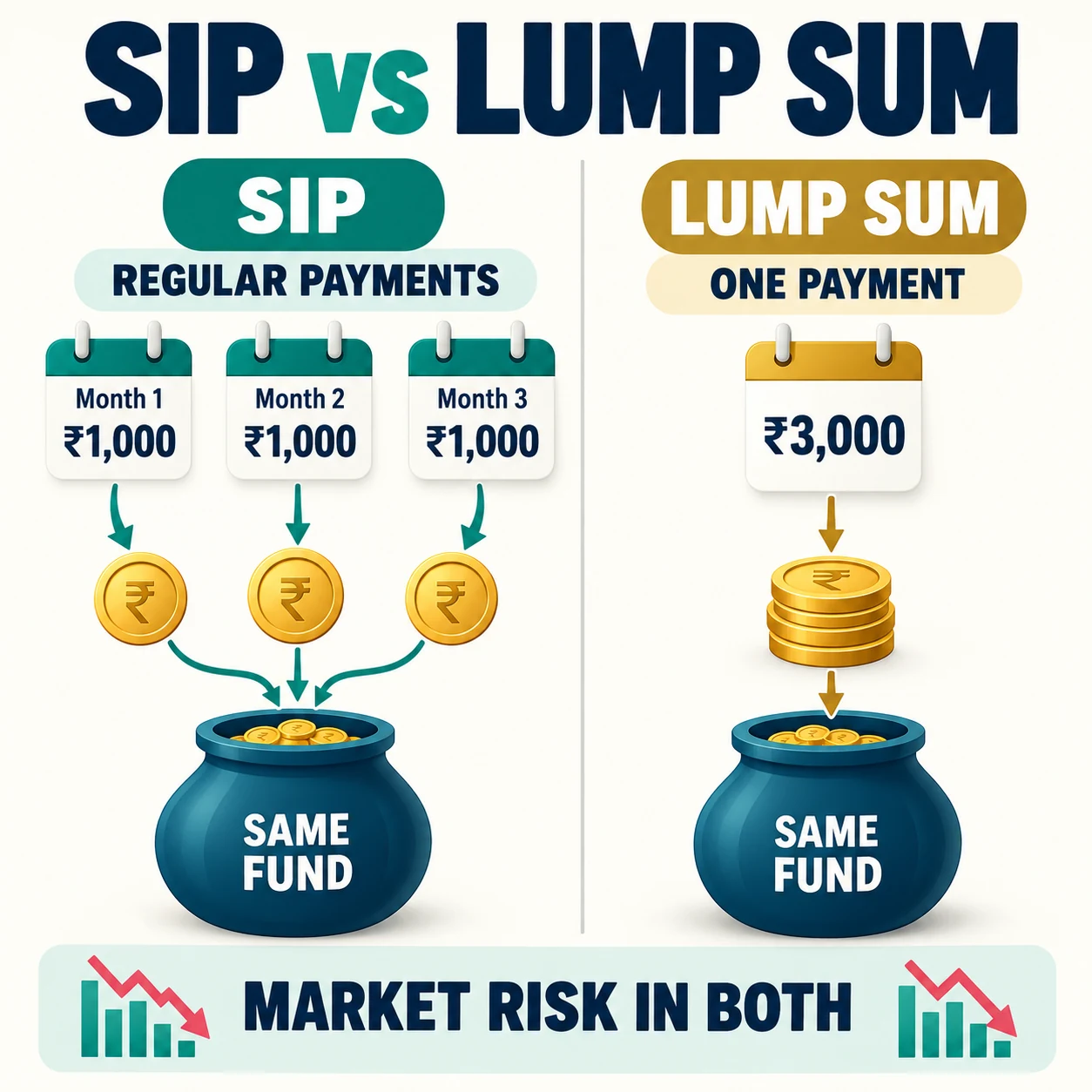
A Systematic Investment Plan (SIP) invests a chosen amount at regular intervals. A lump sum is a one-time investment.
For example, ₹1,000 in each of three months is a SIP, while ₹3,000 invested at once is a lump sum.
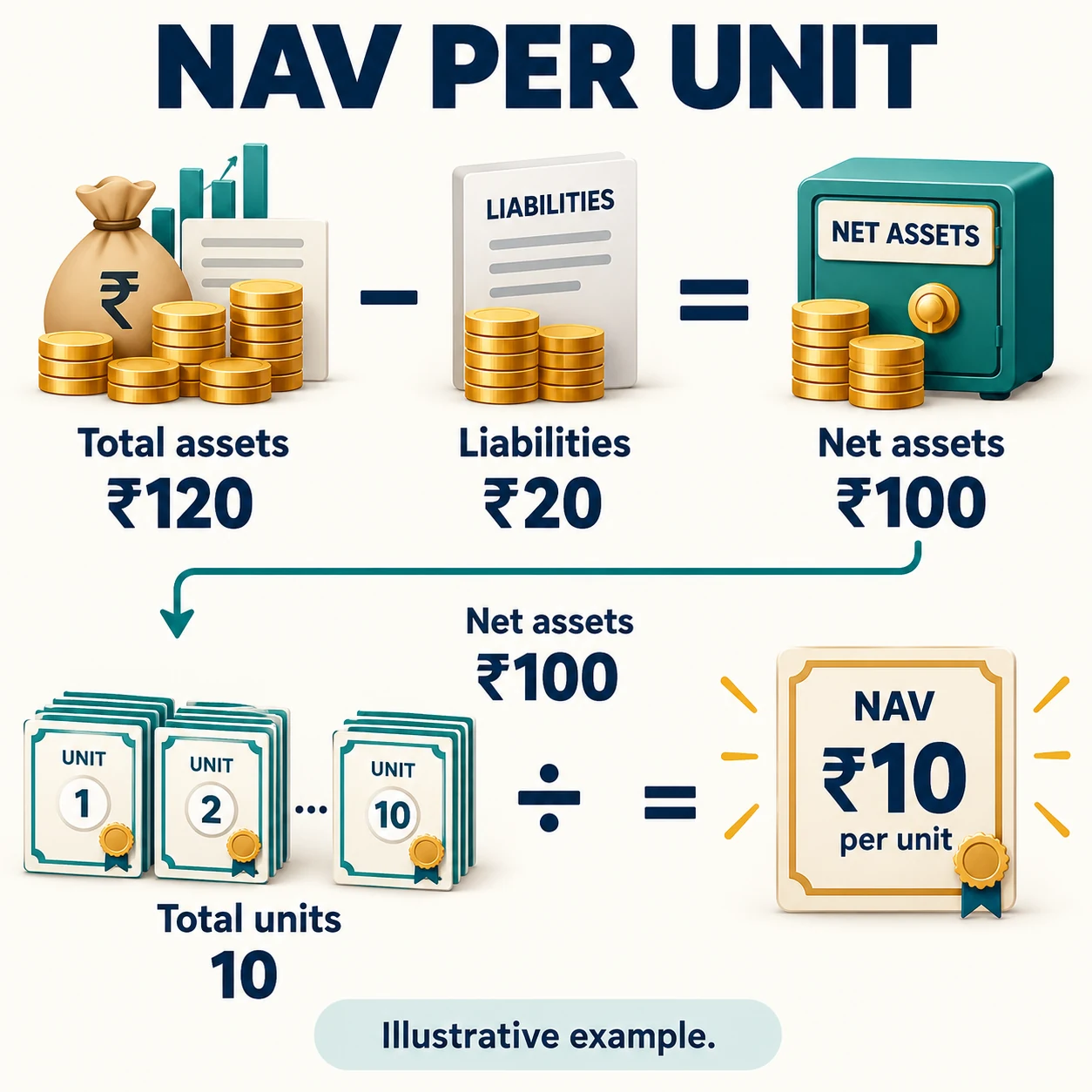
The total contributed is the same, but investment dates and applicable NAVs differ, so the number of units and results can differ. A SIP supports regular investing; it does not guarantee profit, even over a long period.
Key point: SIP and lump sum are two ways to invest money.
5. Equity, debt, hybrid and index funds
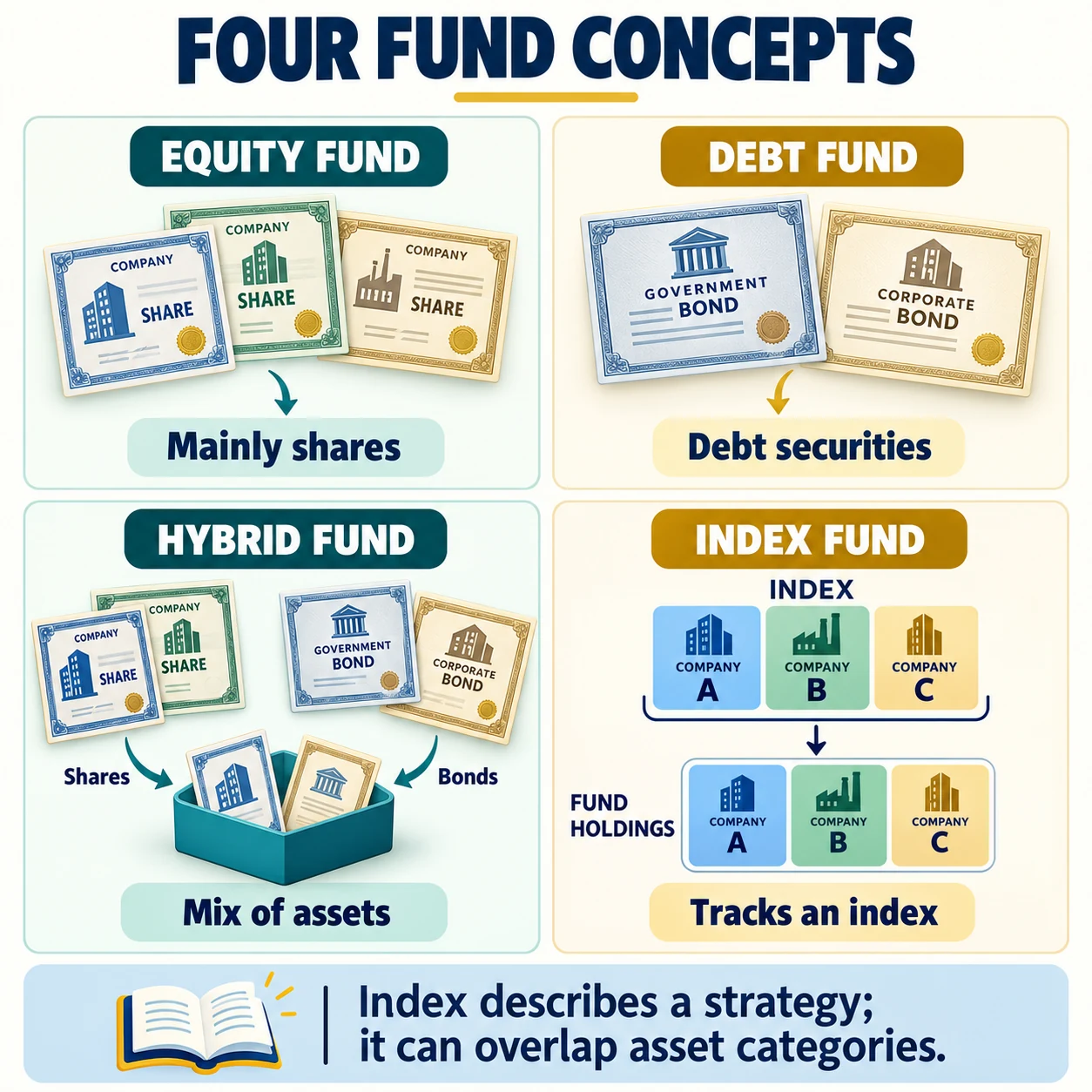
An equity fund primarily holds company shares. A debt fund holds debt and money-market instruments and still faces interest-rate, credit and liquidity risks.
A hybrid fund combines asset classes in proportions described in its mandate. Index describes an investment strategy rather than a separate asset class: an index fund can track an equity or debt index. Tracking error and expenses can cause its results to differ from its index.
Key point: Understand both the underlying assets and the investment strategy.
6. Direct Plan and Regular Plan
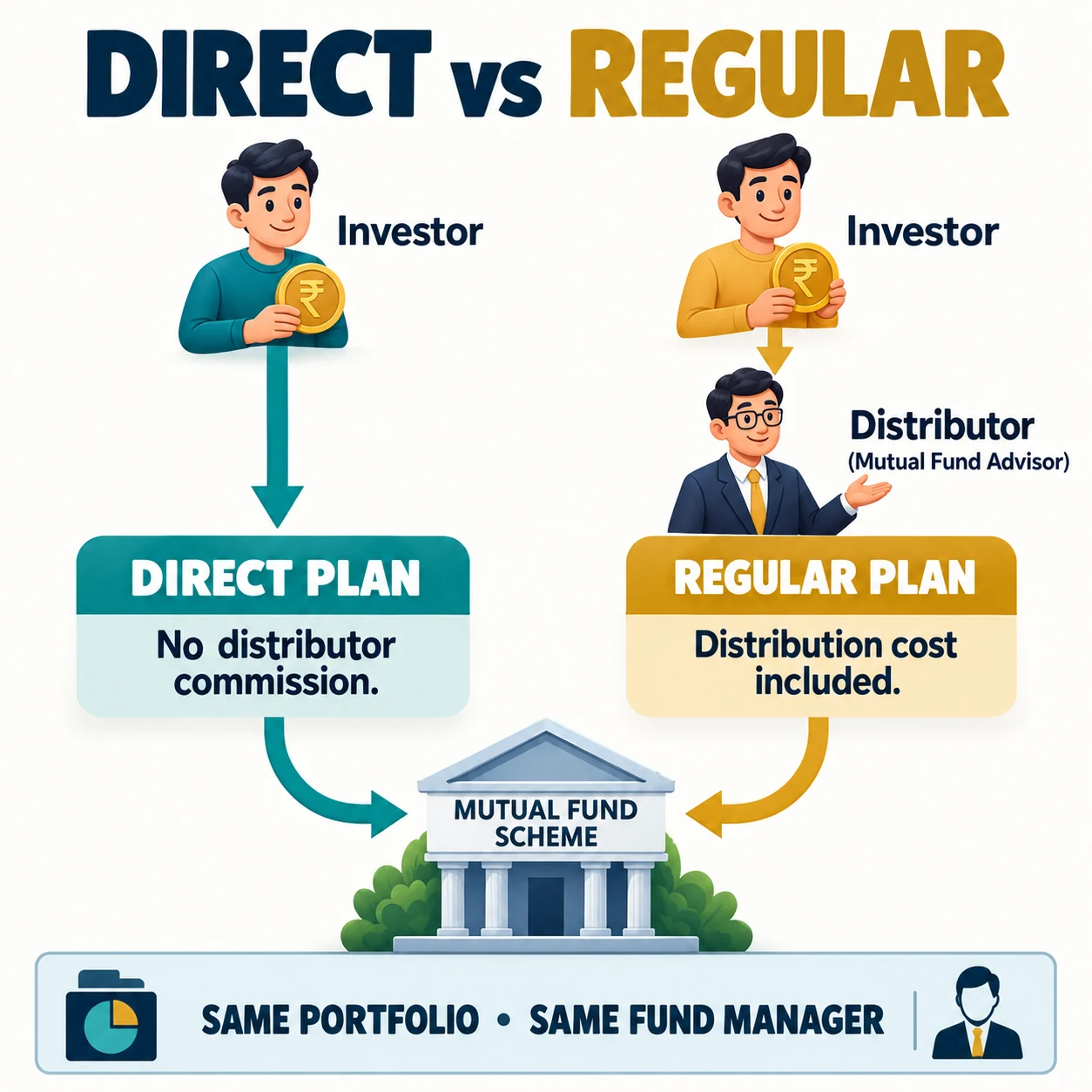
The Direct Plan excludes distributor commission, so its expense ratio is lower than the Regular Plan of the same scheme. Each plan has its own NAV.
A Regular Plan includes distribution costs and may involve distributor assistance. These costs and service arrangements should be understood without treating one plan as a different underlying portfolio or promising a result.
Key point: Plans of the same scheme have different costs and NAVs.
7. Growth and IDCW options
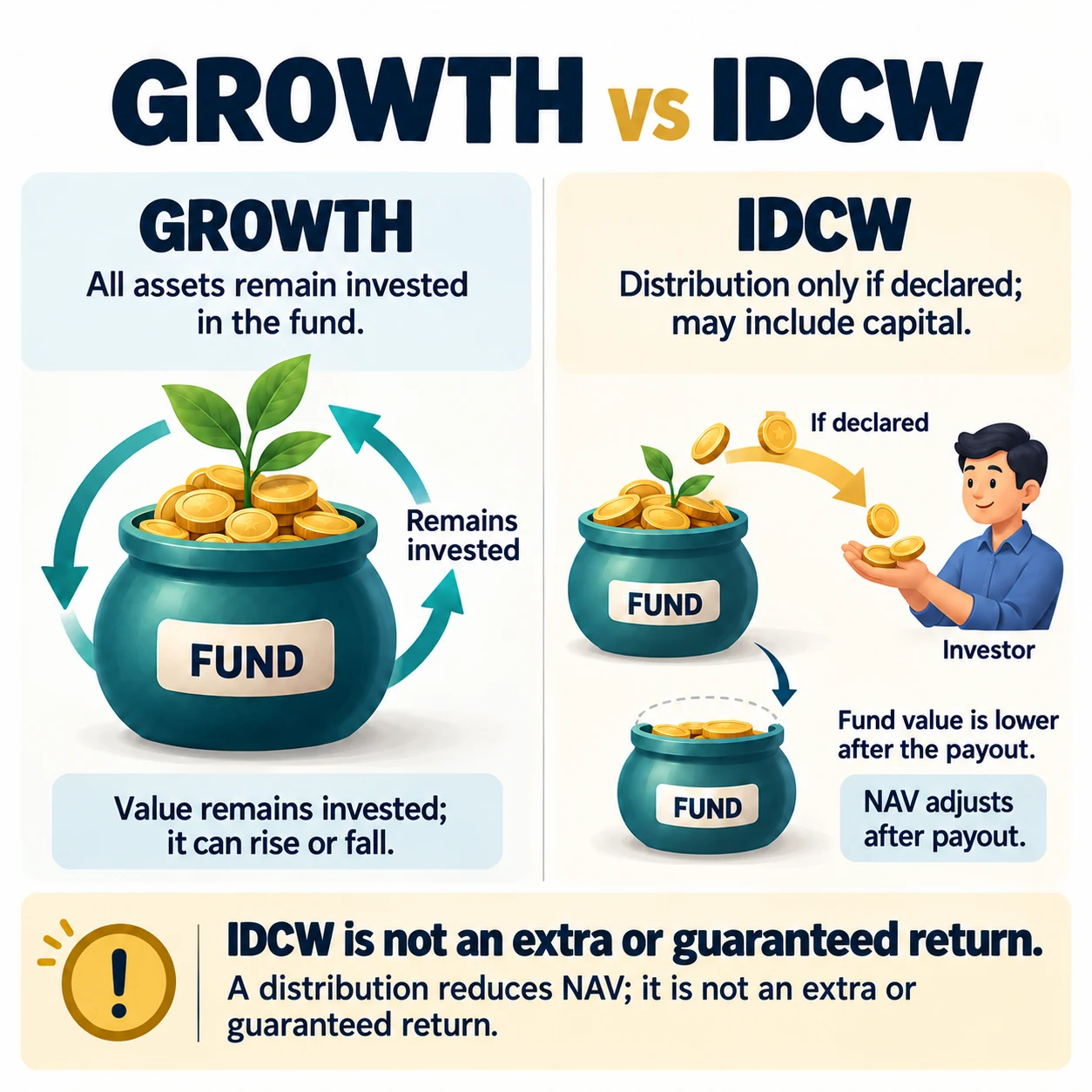
Under the growth option, returns remain reflected in the scheme value. Under IDCW, a distribution may be made if declared and subject to scheme terms.
IDCW means Income Distribution cum Capital Withdrawal. Distributions depend on declaration and available distributable surplus; they can include withdrawal of capital.
They are not an additional reward on top of an unchanged unit value. A payout reduces the NAV to the extent of the distribution, subject to other valuation changes. Growth retains value within the scheme; it is not a guaranteed compounding rate.
Key point: IDCW is not an extra or fixed return; a distribution reduces NAV.
8. Expense Ratio and Exit Load
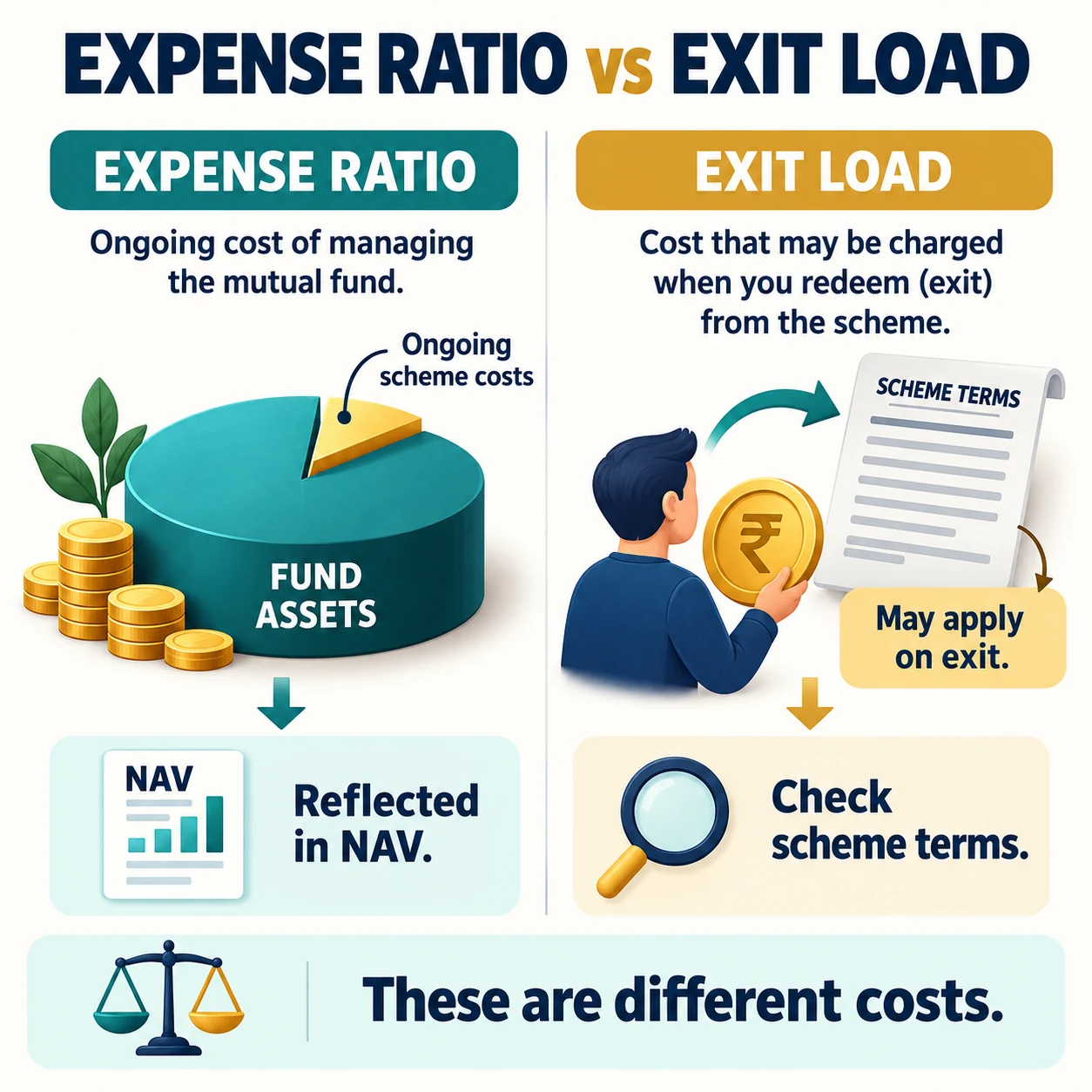
The expense ratio (TER) represents recurring scheme expenses and affects NAV over time.
Recurring operating expenses are reflected in NAV; they are not normally a separate annual bill sent to the unit holder. Exit load is different: it may reduce redemption or switch-out proceeds when the relevant conditions apply.
The rate, holding period and exemptions depend on the scheme and terms applicable to the units. Check the current disclosures; this article fixes no rate or tax treatment.
Key point: Ongoing scheme costs and an exit load are different charges.
9. Riskometer and investment risk
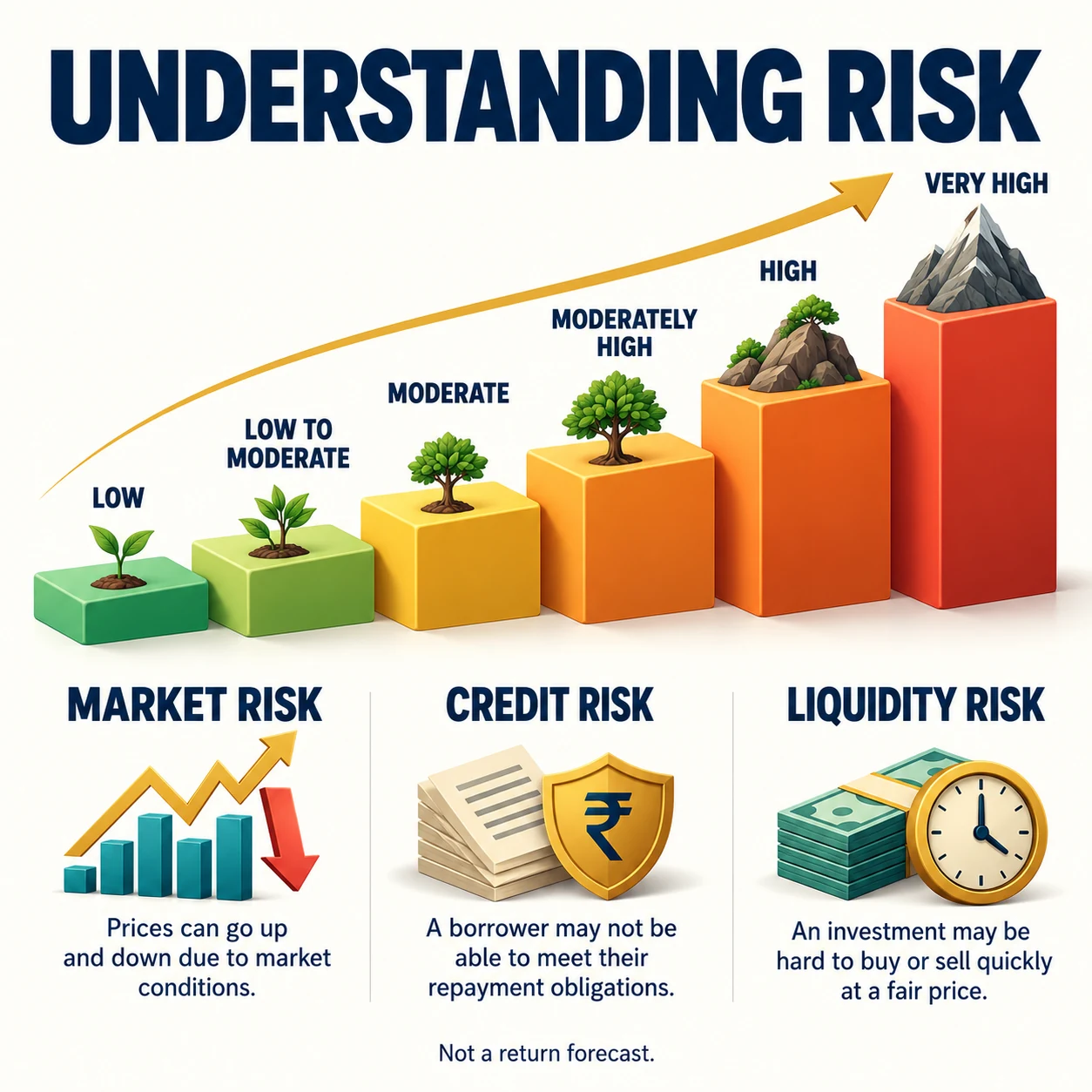
The Riskometer visually indicates a scheme’s risk level. It cannot predict returns or remove the possibility of loss.
The six levels are Low, Low to Moderate, Moderate, Moderately High, High and Very High. A scheme’s level can change.
Market risk concerns changing prices; credit risk concerns an issuer failing to meet obligations; liquidity risk concerns difficulty selling holdings when required. A low label still does not mean risk-free. The image is a conceptual illustration, not a current rating for any scheme.
Key point: The Riskometer describes risk, not future returns.
10. Goals, time horizon and risk profile
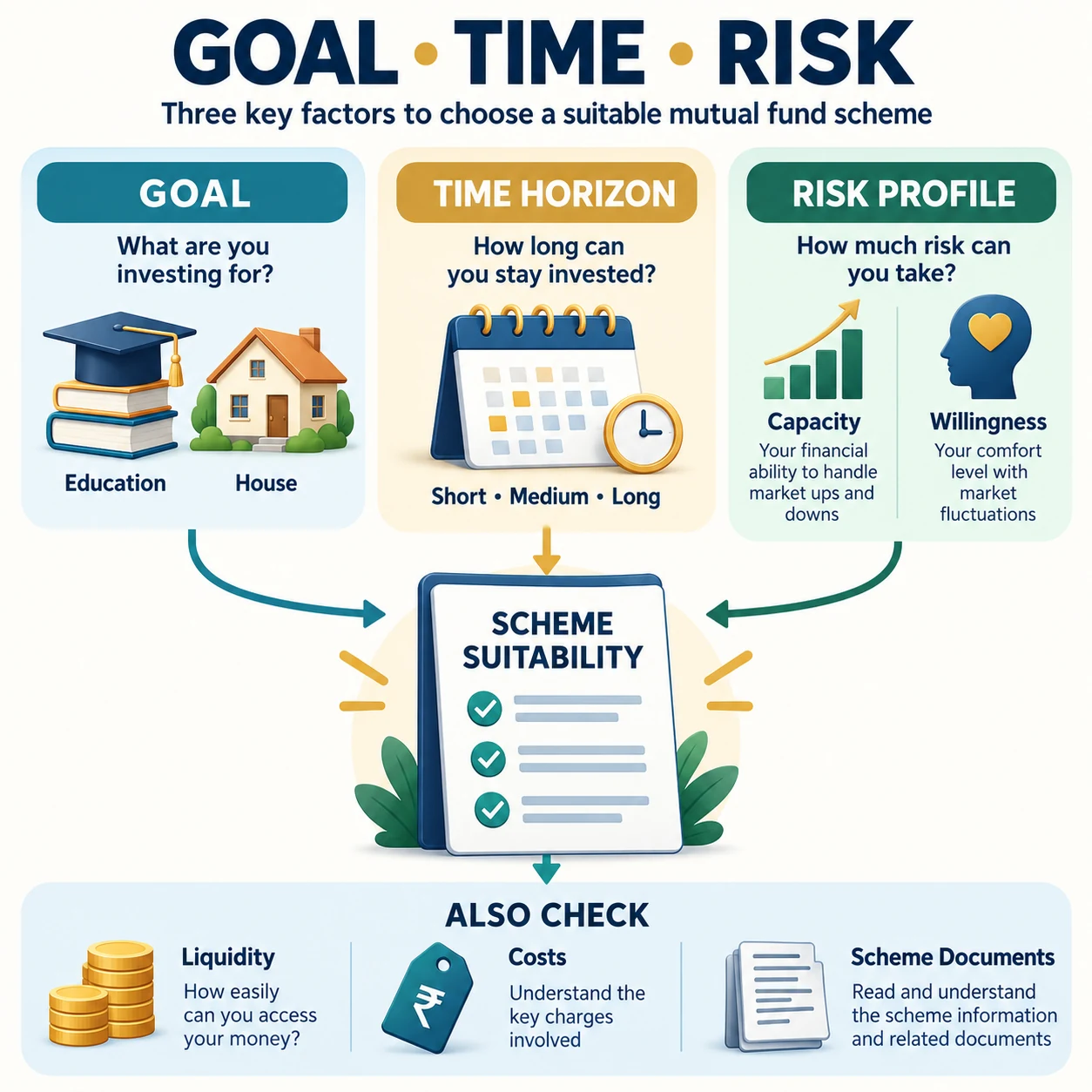
A goal is the purpose for which money is set aside. Time horizon is when it may be needed. Risk profile describes capacity and willingness to handle uncertainty and losses.
Consider the purpose of the money, when it may be needed and how a fall in value would affect essential spending. Risk capacity is the ability to absorb a loss; risk willingness is comfort with uncertainty.
They may differ. Category names alone do not establish suitability. Examine the actual objective, asset allocation, access to money, costs and disclosures before making an individual decision.
Key point: Consider the goal, when money is needed and the ability to bear losses together.