Understanding the stock market
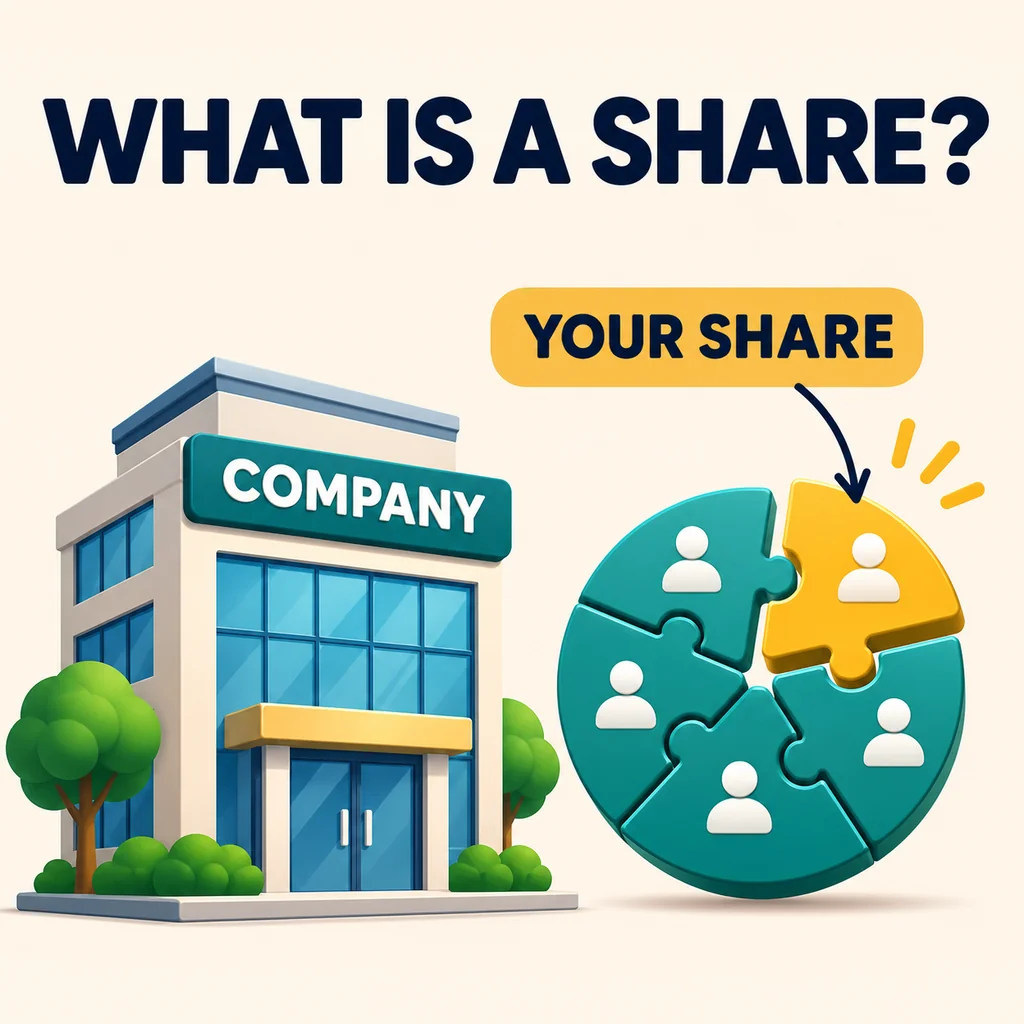
2. How does the stock market work?
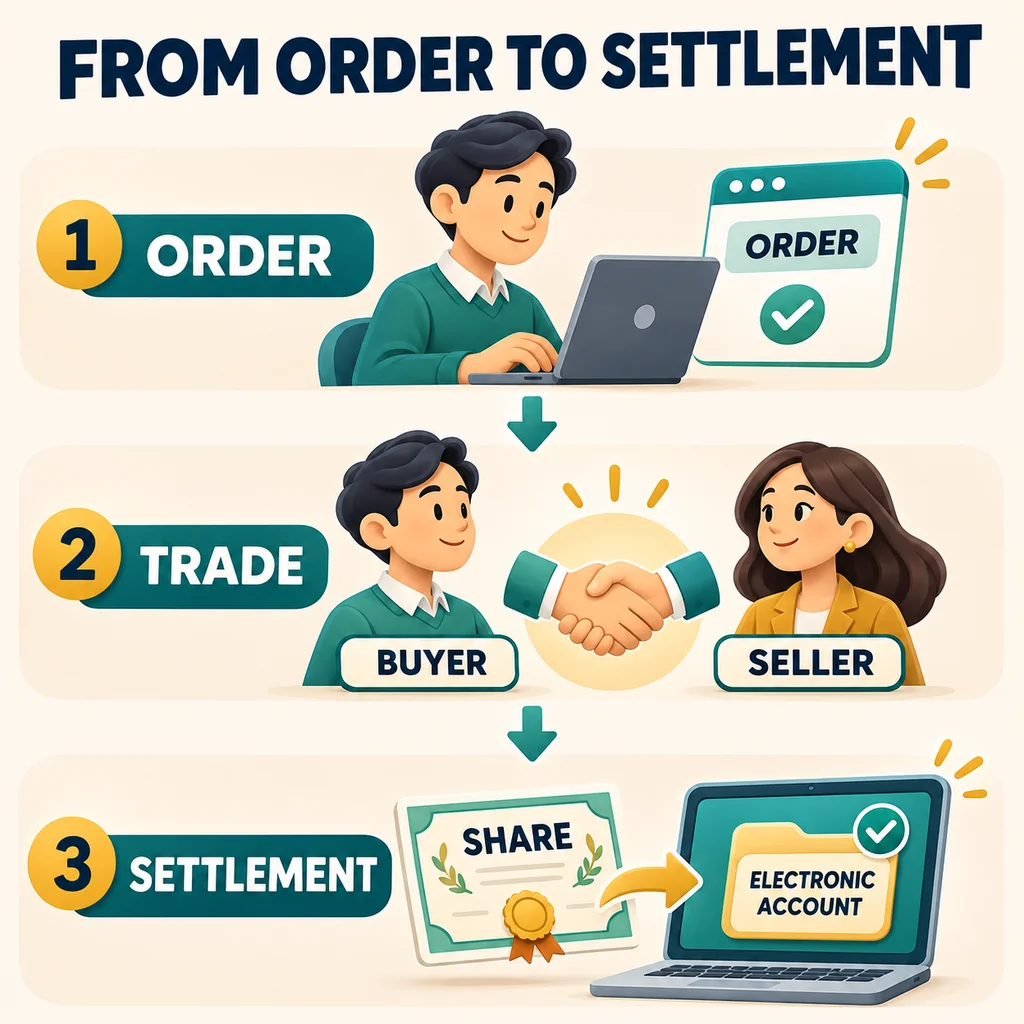
You place a buy order through your broker’s app. The broker sends it to a stock exchange, where buy and sell orders are matched according to price and other conditions. A trade takes place when the orders match.
Suppose you place an order to buy 10 shares at up to ₹100 each. If only four shares are available at that price, you may initially get four shares. Another sell order must match before you can buy the remaining six.

3. How is an IPO different from buying shares on the market?
In an initial public offering (IPO), a company’s shares are offered to public investors for the first time. This happens in the primary market. You apply, and you receive shares if they are allotted to you. An IPO may include newly issued shares, shares offered for sale by existing shareholders, or both.
Once the shares are listed, you can buy them from a seller on an exchange. This is the secondary market. An IPO involves an application and allotment. An exchange trade involves matching buy and sell orders.

4. What are NSE and BSE?
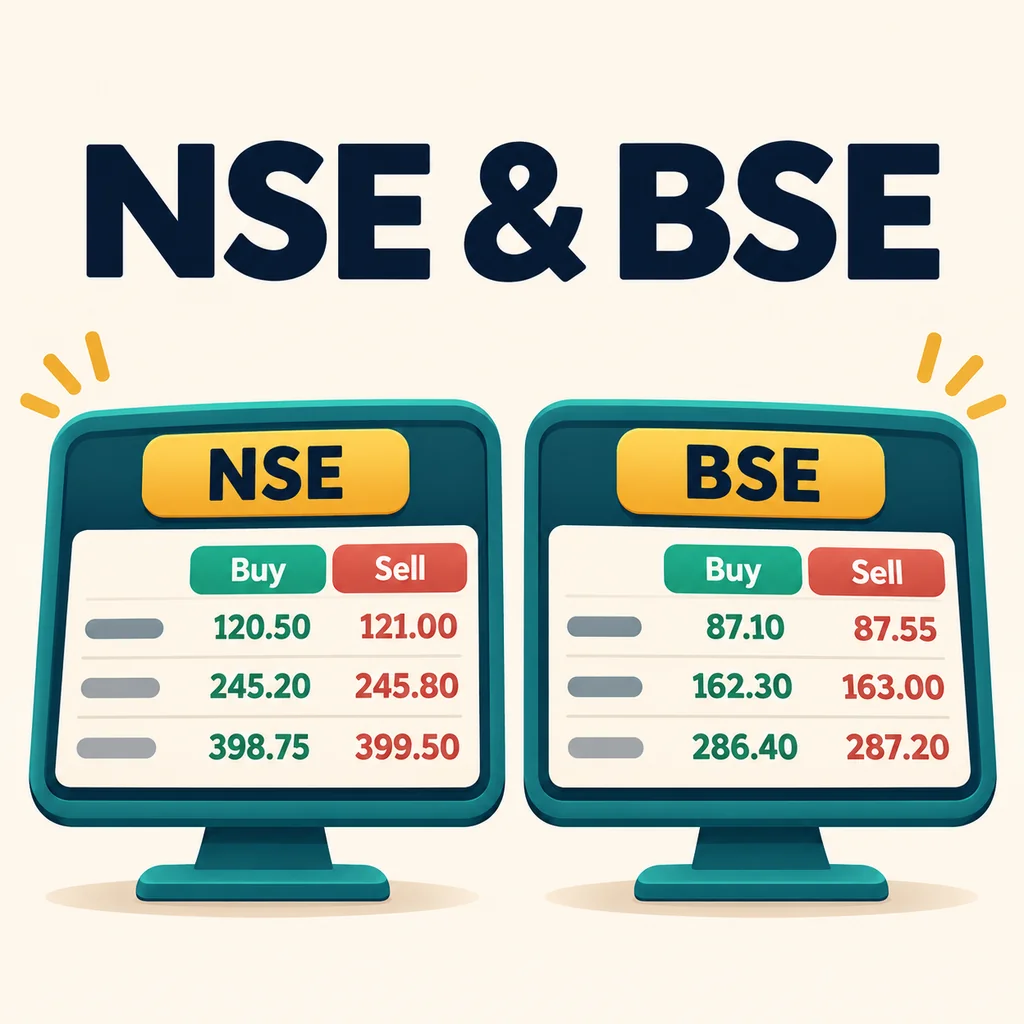
NSE stands for National Stock Exchange. BSE is BSE Ltd., formerly the Bombay Stock Exchange. These exchanges match buy and sell orders for listed shares.
A company can be listed on both exchanges. Since each exchange has its own buy and sell orders, the displayed price for the same share can differ slightly at the same moment.
5. What are the Nifty and Sensex?
The Nifty 50 and Sensex are stock market indices. The Nifty 50 tracks shares of 50 selected companies, and the Sensex tracks shares of 30 selected companies. Each index represents the overall movement of its group.
For example, the Nifty can rise by 1% while the share price of one company in the index falls. The index reflects the movement of the group, with different weights assigned to its constituents.

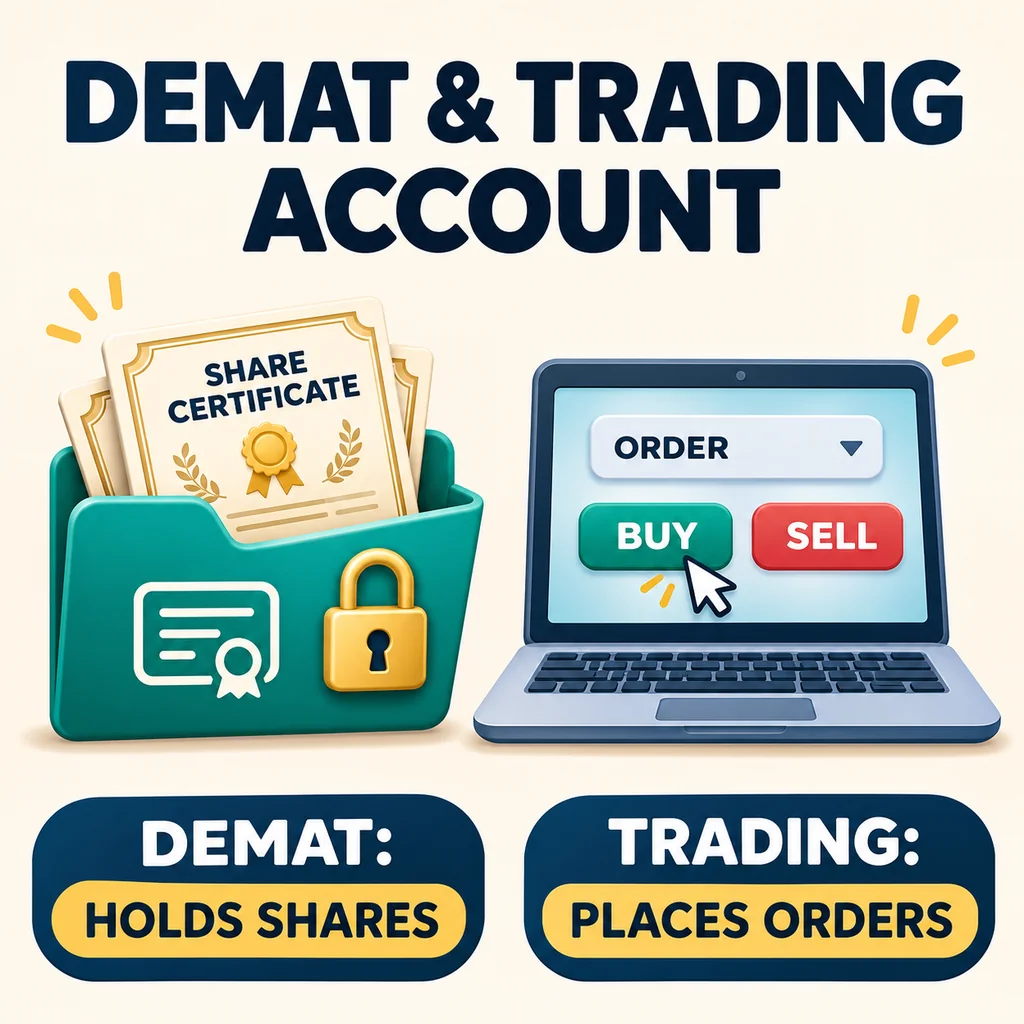
6. What is the difference between a demat and a trading account?
You use a trading account to place buy and sell orders. A demat account holds your shares electronically. You use a linked bank account to transfer money in and out.
In simple terms, the trading account is where you place orders, and the demat account is where you hold shares.
7. How is a share purchase completed?
Suppose you place an order to buy five shares at ₹100 each. If the whole order matches, the shares cost ₹500. Applicable transaction charges may be extra.
When the order matches, the trade is executed. The subsequent transfer of money and shares is called settlement. For a delivery purchase, the shares are credited to your demat account through this process. The broker’s contract note lets you check the trade price, quantity and applicable charges.
8. What are market and limit orders?
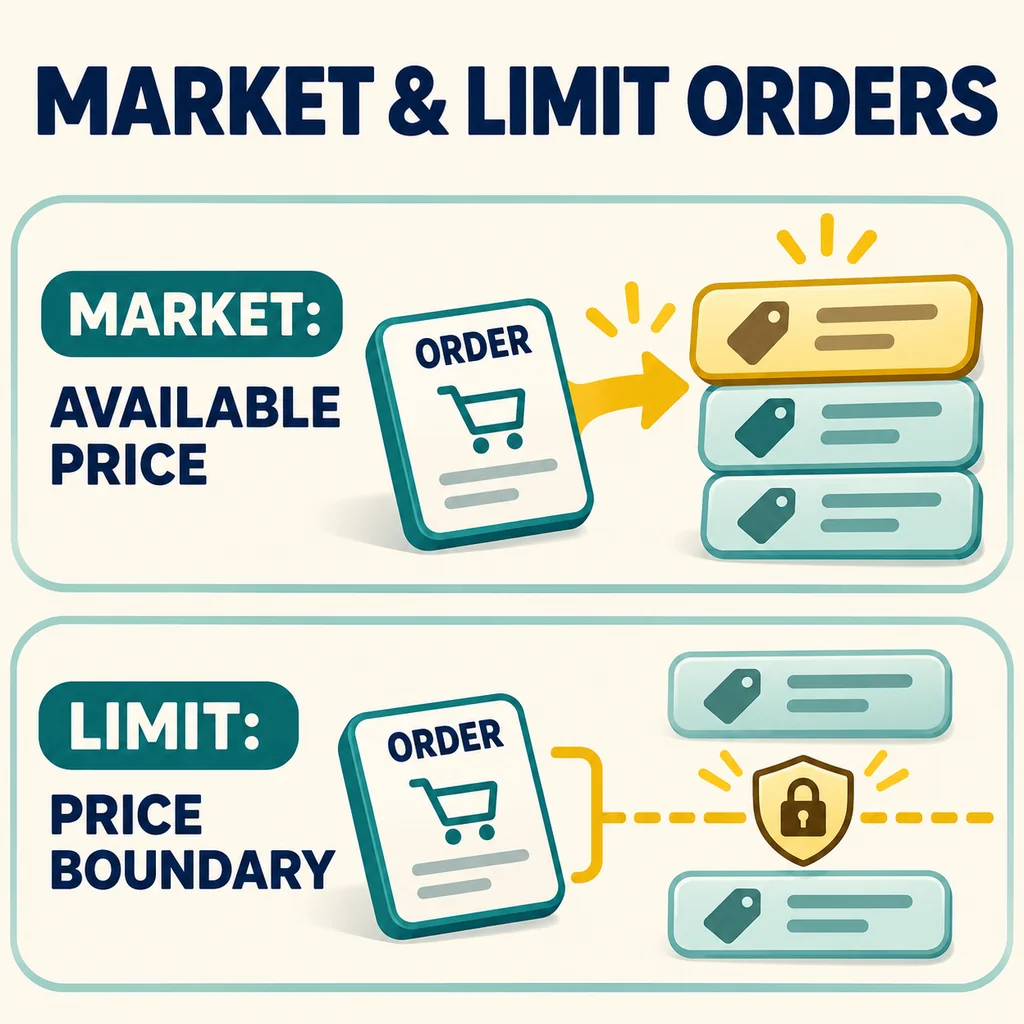
A market order matches against prices available at that moment. If the last traded price shown on the screen is ₹100 and the lowest available sell price is ₹102, your purchase may start at ₹102.
A limit order lets you set a price boundary. A buy limit at ₹100 can match at ₹100 or lower. If there is no seller within your limit, the order may remain unfilled. A sell limit sets the minimum price you are willing to accept.
9. Why does a share price change?
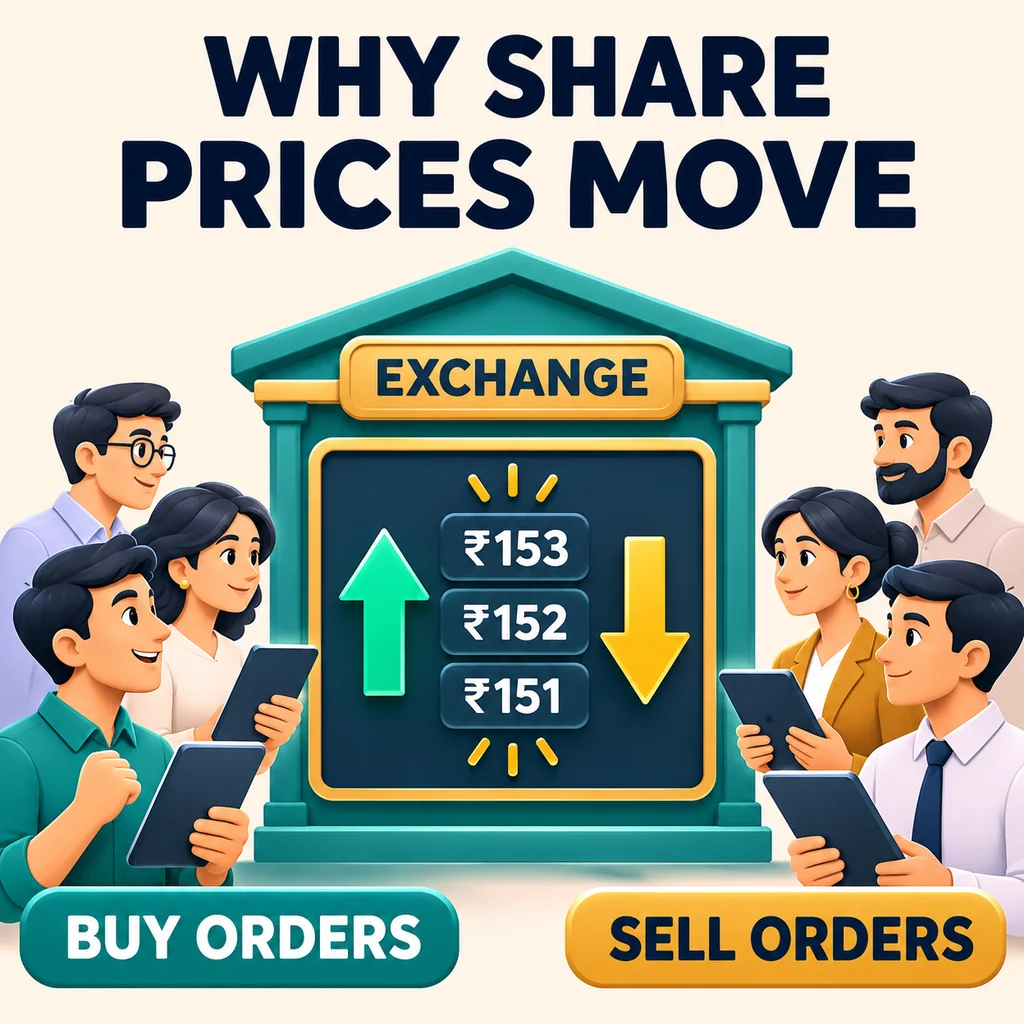
The last traded price is the price at which the most recent trade took place. It changes when the next buyer and seller match at a different price.
For example, if more buyers are willing to pay a higher price after the company reports its results, subsequent trades may take place at higher prices. News, company results and broader market events influence expectations. Those expectations show up in buy and sell orders.
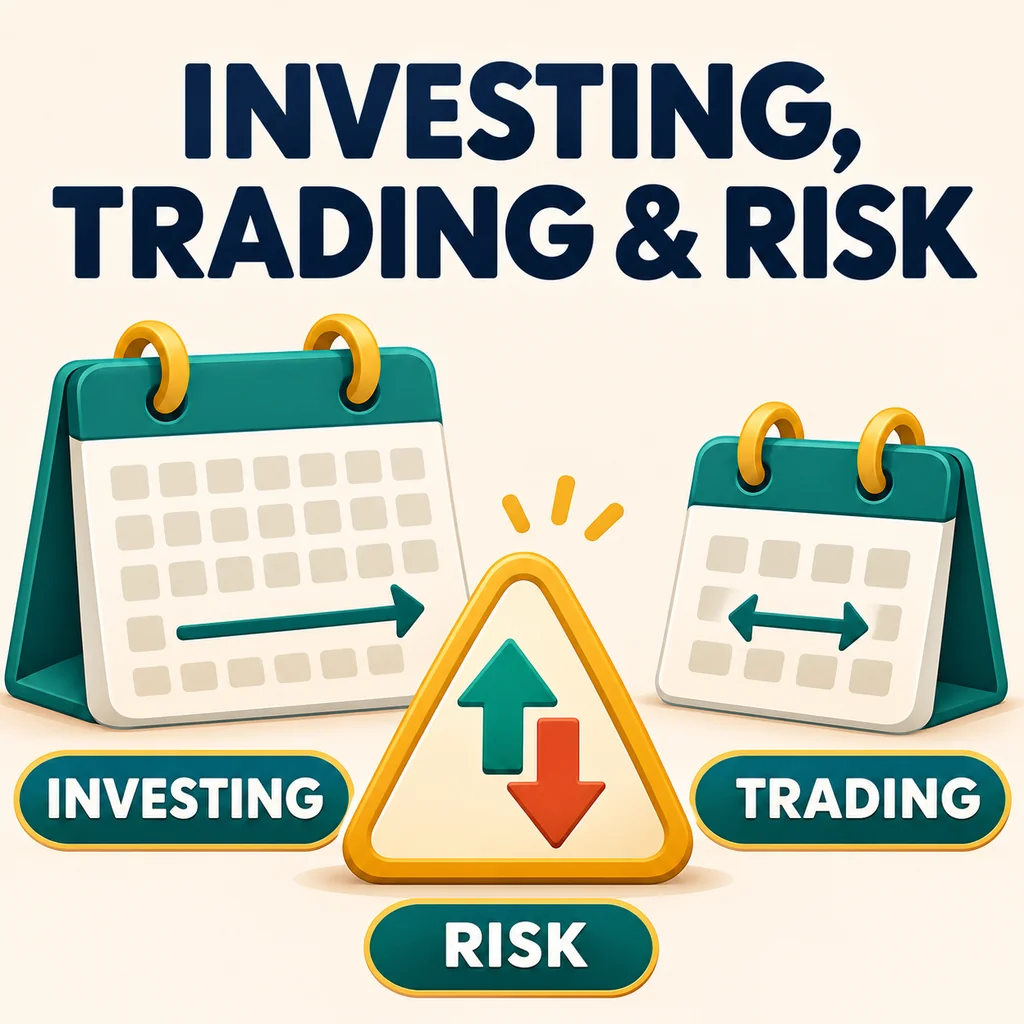
10. Investing, trading and risk
Investing generally focuses on the company’s business and its performance over the long term. Trading pays more attention to price movements over shorter periods. Both can lead to losses, and returns are never guaranteed.
Before making a real trade, write down a hypothetical one. How many shares would you buy, at what price, with which order type, and at what total cost including charges? How much would the value fall if the price dropped by 10%? Working through these questions makes the numbers in the app easier to understand. Never share your account password or OTP.